What goat mulching is
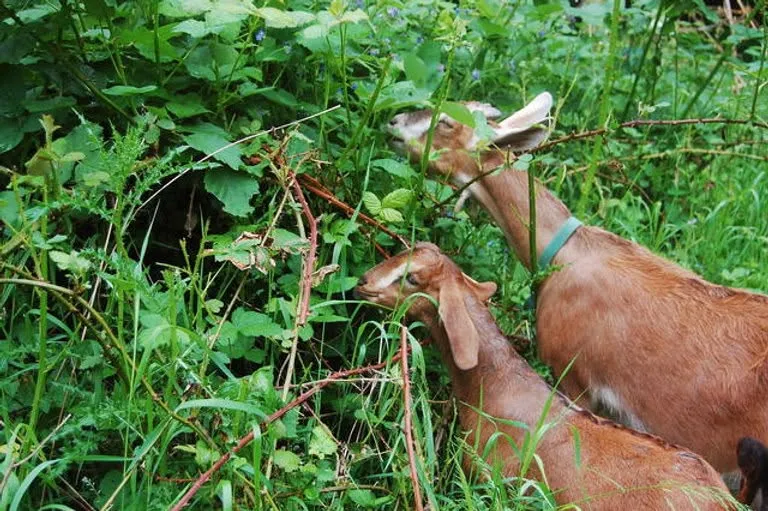
Goat mulching — also called targeted grazing or goat brush clearing — uses a managed herd of goats to clear unwanted vegetation from a property. The goats eat invasive species, brush, scrub, multiflora rose, poison ivy, kudzu, and other unwanted growth. Over the course of a few weeks, an area becomes cleared without machinery, chemicals, or soil disturbance.
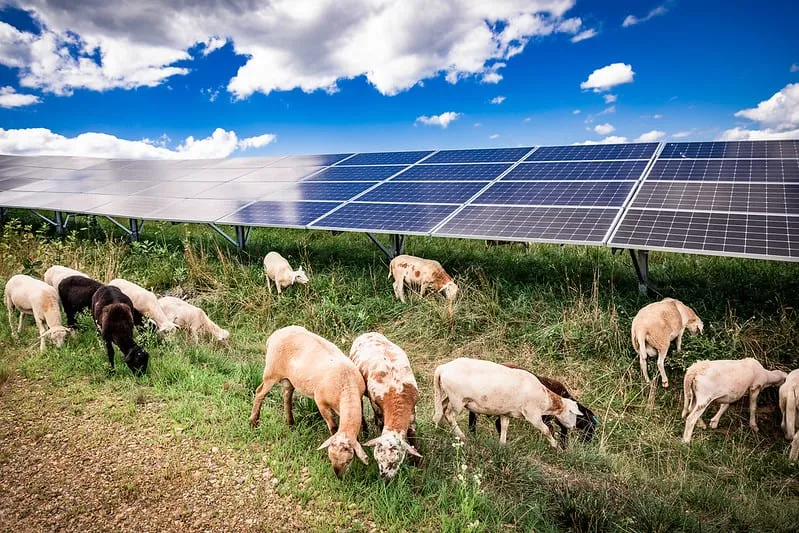
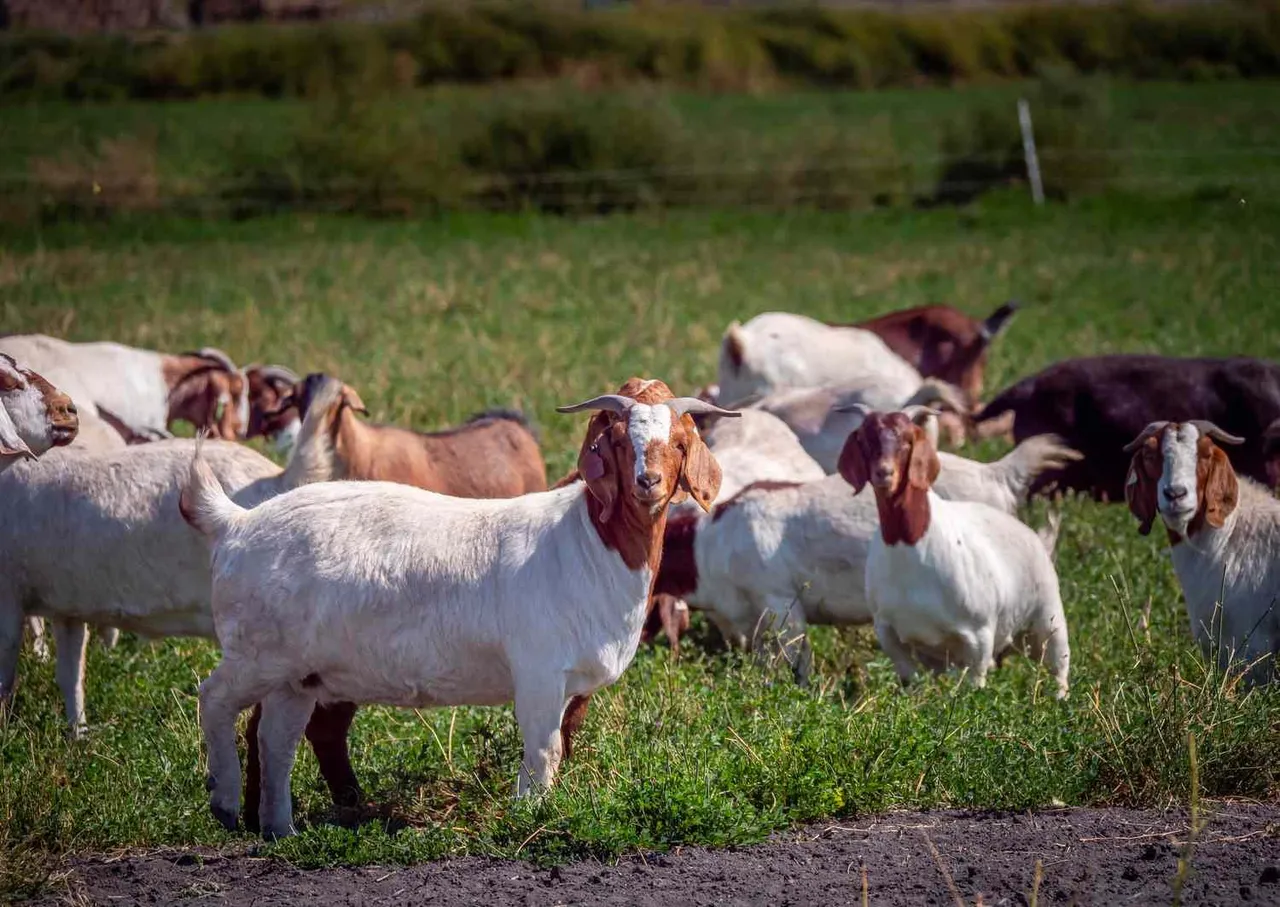
We bring our own herd of approximately 100 goats, along with portable electric fencing, water systems, and guardian animals. We set up on-site, manage the herd daily through the project, and pack out when the work is complete.
When goat mulching makes sense
This service is the right fit for specific situations — not a replacement for forestry mulching across the board. Goats are the better choice when:
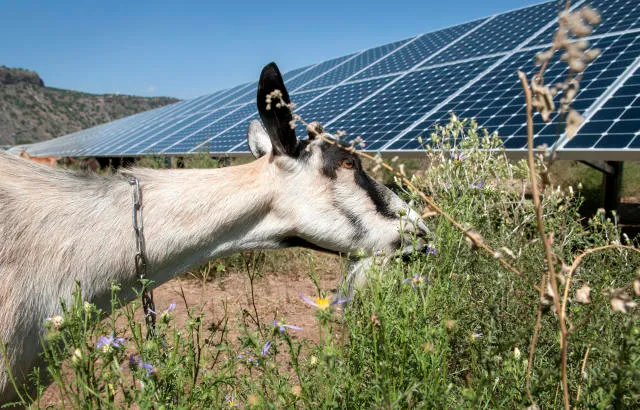
- Solar farm vegetation management — Maintaining cleared space around and between solar panels without risk of equipment damage or chemical runoff
- Conservation properties — Clearing invasive species without disturbing native soil structure or sensitive ecology
- Steep slopes — Terrain too steep or unstable for tracked equipment
- Wetland-adjacent areas — Where heavy machinery would damage hydrology or sensitive root systems
- Cemeteries, parks, and historic properties — Sites where visual disturbance and noise are concerns
- Properties seeking organic / chemical-free clearing — No herbicides, no machine emissions, no soil compaction
- Difficult-access areas — Spots where a track loader can’t fit but vegetation still needs management
If you need acreage cleared in days rather than weeks, mechanical forestry mulching is typically the better choice. Goats are slower but leave a different — and in some cases preferable — outcome behind.
How a goat mulching project works
Site visit and assessment. Every project starts with a walk of the property. We assess vegetation density, terrain, access for transport, water availability, and any fencing constraints. We also identify what the goats should NOT eat (specimen plants, gardens, neighboring properties).
Quote and scheduling. Based on the site visit, we provide a written quote based on acreage, vegetation density, and project duration. Most jobs take 2-6 weeks depending on size and how aggressively the area needs clearing.
Setup. Before the herd arrives, we install portable electric fencing to contain the goats in the target area, set up water systems, and bring in a guardian animal (donkey or livestock-protection dog) to deter predators.
Active grazing. The herd works the area continuously. We visit daily to check water, fence integrity, and animal welfare. We move the fencing as sections get cleared to direct the herd toward fresh vegetation.
Completion. When the area is cleared to spec, we remove the herd, fencing, and equipment. The site is left ready for whatever the next phase is — solar installation, restoration planting, or simply maintained as cleared ground.
What to expect
- Timeline: 2-6 weeks for most jobs (slower than mechanical clearing — this is a feature, not a bug, for sensitive sites)
- On-site presence: Daily visits during the project for animal welfare and fence management
- Visual outcome: Vegetation grazed to ground level. Goats eat leaves, bark, and small woody stems but won’t remove large stumps or trees. For sites needing full clearing including trees, we typically combine goat work with follow-up mechanical clearing.
- Pricing: Project-based, generally $400-$1,000 per acre depending on vegetation density and project complexity. Free quotes after a site visit.
Service area
We work across Burlington, Ocean, and Atlantic counties — the same service area as our mechanical clearing work. We’re based in Pemberton, NJ, and most jobs are within an hour of home base. For solar farm projects and larger commercial work, we’ll travel farther — ask.